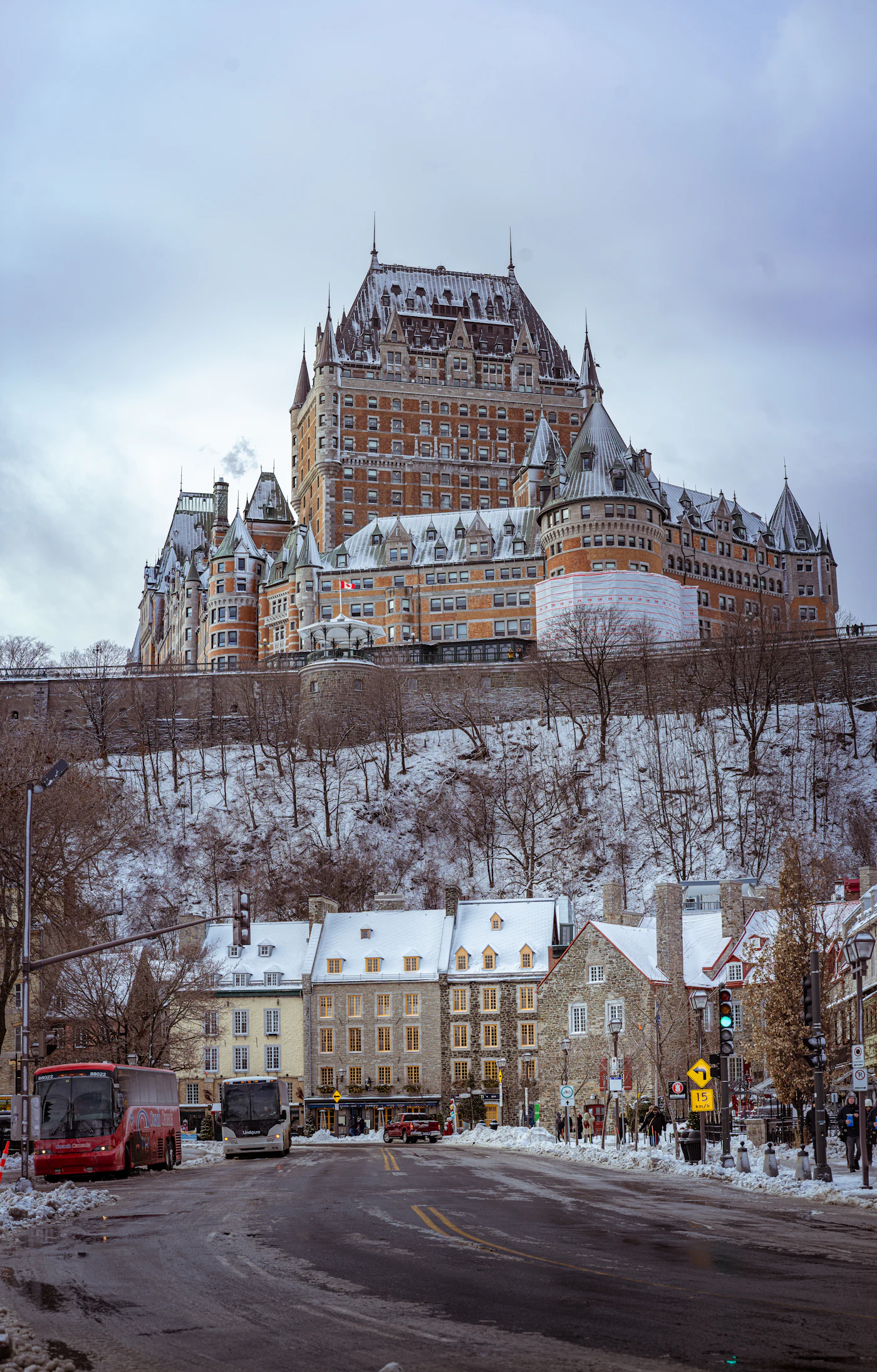
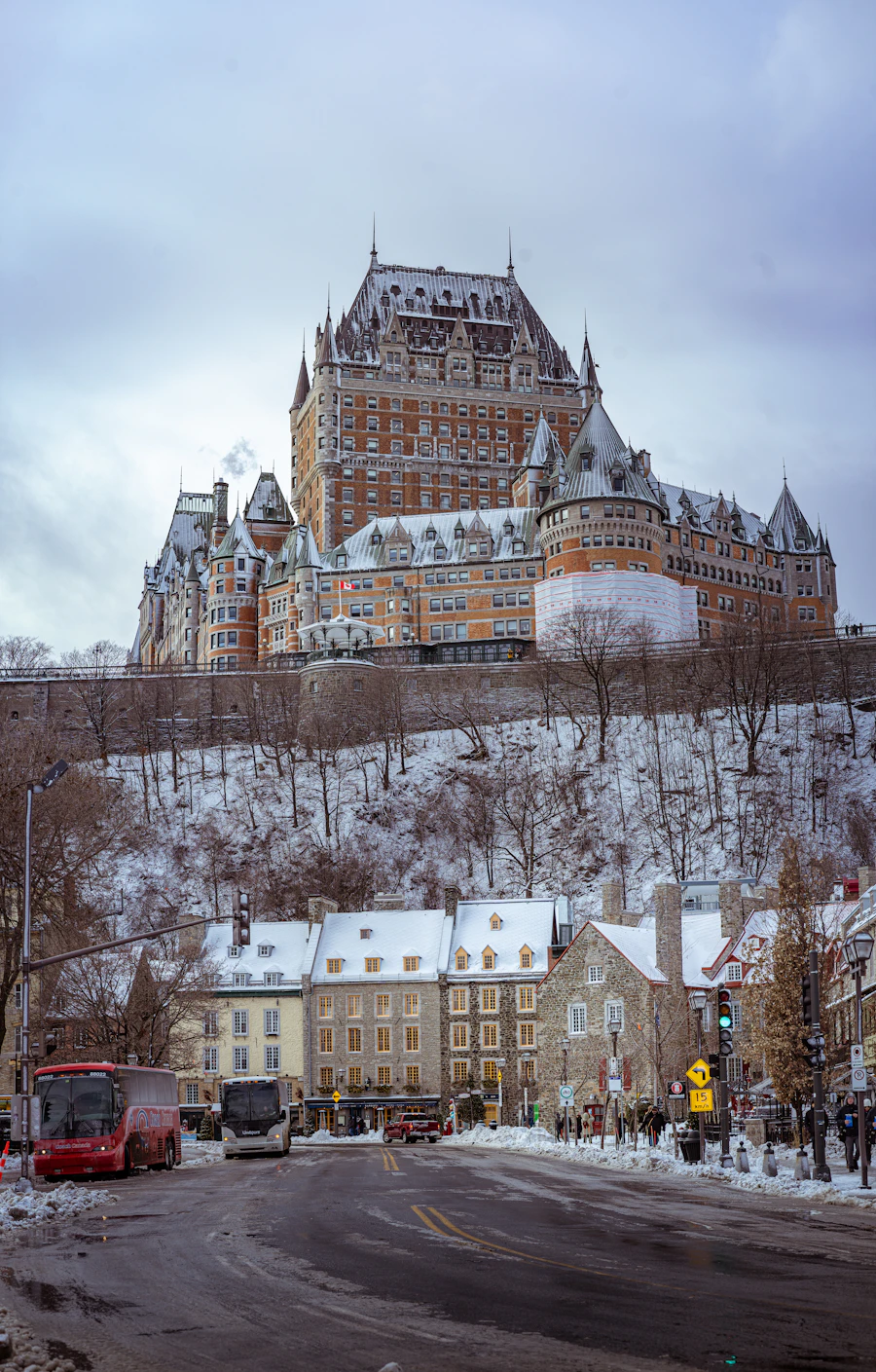
Every visitor to Quebec City takes the same photograph: the Château Frontenac rising above the fog from the Dufferin Terrace, with the St. Lawrence shimmering far below. It is one of the world's great images — and it earns its fame. But Quebec City is an astonishingly deep place, and those who venture beyond the obvious landmark find a city of secret staircases, neighbourhood bakeries, cliff-top parks, and a modern arts district that most tourists never discover.
Understanding Quebec City's Layout
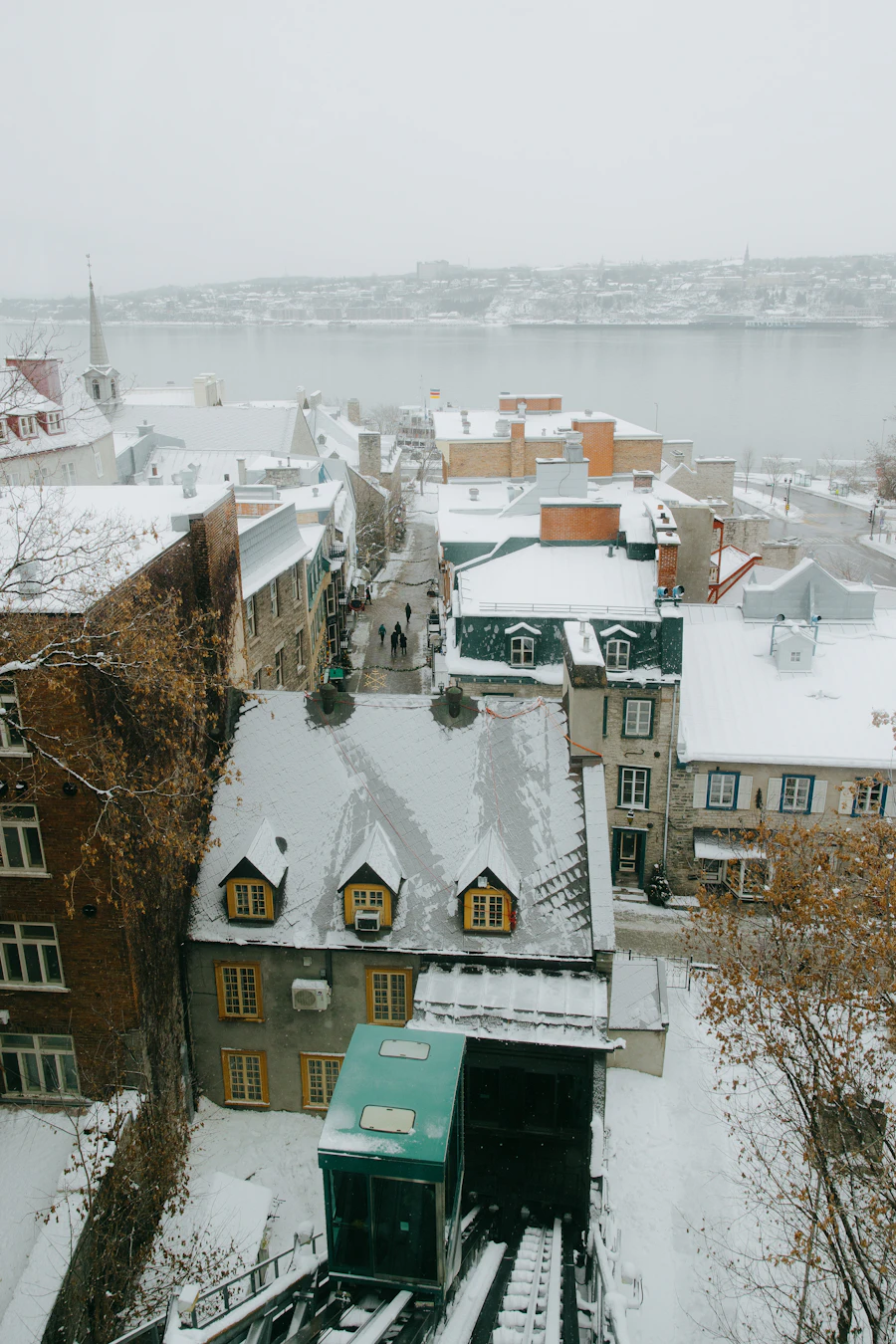
Quebec City is organised around its remarkable topography. The Haute-Ville (Upper Town) sits atop the Cape Diamond cliff, enclosed by 4.6 kilometres of fortification walls — the only surviving fortified city walls north of Mexico. The Basse-Ville (Lower Town) nestles at the base of the cliff, along the river and in the valley between the cliff and the Laurentian foothills. The two levels are connected by the famous funicular, a dozen historic staircases (most famously the Escalier Casse-Cou — the "Breakneck Stairs"), and winding streets that make the city an extraordinary place to explore on foot.
Beyond the fortified walls lie the modern residential neighbourhoods of Montcalm, Saint-Roch, Limoilou, and Saint-Sauveur — each with its own character, local cafés, and hidden pleasures. These are the neighbourhoods where Québécois actually live, and they reward curious wanderers enormously.
Quebec City is an extraordinarily walkable city — the Old City is entirely pedestrian-friendly. For a multi-day itinerary combining Quebec City with the rest of Quebec, try TripPlannerPro.com.
The 10 Best Spots in Quebec City
Quartier Petit-Champlain
The oldest commercial district in North America, Petit-Champlain is a pedestrian lane of 17th-century stone buildings in the Basse-Ville, at the foot of the Breakneck Stairs. Today it is filled with boutiques selling Québécois crafts, art galleries, and intimate restaurants. In winter, it transforms into a magical Christmas market with twinkling lights and falling snow — one of the most photogenic urban scenes in Canada.
Don't just walk the main rue du Petit-Champlain — explore the lanes off it, sit in the café terrasses, and watch artisans at work in their studios. The mural of Louis Jolliet on the side of a building is a neighbourhood landmark.
Place Royale — The Cradle of French America
Place Royale is where it all began. In 1608, Samuel de Champlain founded a settlement here at the base of the cliffs, creating what would become Quebec City. Today, the square is anchored by a bust of Louis XIV and surrounded by meticulously restored 17th and 18th-century stone buildings, including the Église Notre-Dame-des-Victoires — the oldest stone church in North America, consecrated in 1688.
The Musée de la Civilisation's permanent exhibition on Place Royale tells the story of 400 years of Québécois history with impressive artefacts and storytelling. The square itself is best in the morning, before the tourist groups arrive, when it belongs to pigeons and early risers with their morning café.
The Plains of Abraham — Where History Was Made
The Plains of Abraham (Plaines d'Abraham) is where the fate of Canada was decided on September 13, 1759, when British General Wolfe defeated French General Montcalm in a battle lasting less than 15 minutes. Today, this historic battlefield is one of Canada's finest urban parks — 90 hectares of sweeping lawns, treed promenades, and river views, used year-round by joggers, picnickers, and winter sports enthusiasts.
The Battlefields Park Discovery Pavilion has an excellent exhibition on the battle and the Seven Years' War. In winter, the plains host the famous Quebec Winter Carnival, and a network of cross-country ski trails and toboggan runs transforms the park. In summer, major outdoor concerts (including the Festival d'été de Québec) take place on the plains.
Terrasse Dufferin — The City's Great Boardwalk
The Château Frontenac may be the icon, but the real pleasure is the Terrasse Dufferin — the 671-metre wooden boardwalk that runs along the cliff edge beside the hotel, offering sweeping views of the St. Lawrence River, the Île d'Orléans, and on clear days, the Laurentian Mountains. Built in 1879 by Governor General Lord Dufferin, the terrace is a stage for street performers, wedding photos, evening promenaders, and winter ice slides.
From the terrace, the promenade des Gouverneurs continues along the cliff face to the Plains of Abraham — a jaw-dropping elevated walk with the river hundreds of metres below and the city's rooftops above. It is one of the most dramatic urban walks in Canada.
Saint-Roch — The City's Creative Soul
Saint-Roch is the neighbourhood that surprises visitors most. Located in the lower city's valley, it was once a working-class industrial district that had fallen into decline by the 1980s. Today it has been reborn as Quebec City's most dynamic neighbourhood — a dense grid of independent coffee shops, art galleries, design studios, high-end restaurants, microbreweries, and the campuses of several universities and tech companies.
The neighbourhood's main artery, rue Saint-Joseph, has transformed into one of Quebec City's best restaurant streets — featuring wood-fired pizza, innovative Québécois bistros, ramen shops, and one of Canada's best crémeries. The Saint-Roch public market is excellent on weekends. The neighbourhood is also home to some of the city's best independent bookshops and clothing boutiques.
5 More Essential Quebec City Experiences
Île d'Orléans — A 17th-Century Island 10 Minutes from the City
Connected to Quebec City by a single bridge, Île d'Orléans feels like stepping back 300 years. This rural island in the middle of the St. Lawrence has been farmed continuously since 1652, and its 35,000-hectare expanse is covered with orchards, strawberry fields, vineyards, cider houses, and farms selling artisan cheeses, honey, and maple products. The six villages on the island have beautiful historic churches and stone farmhouses, and the drive around its 67-kilometre perimeter is one of the most pleasant short excursions in Quebec.
Montmorency Falls — Taller Than Niagara
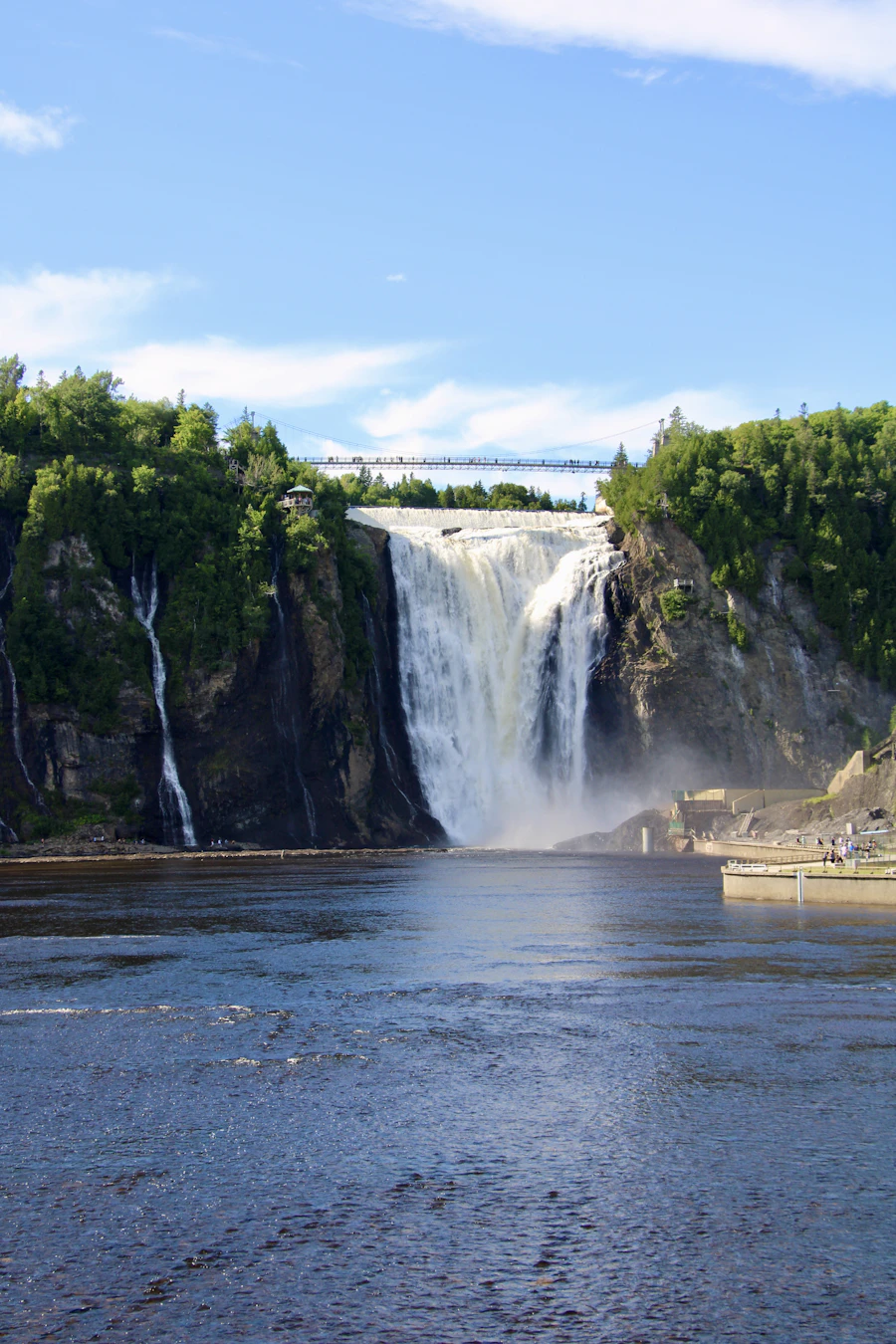
Just 12 kilometres east of Old Quebec, the Chute Montmorency plunges 84 metres into the St. Lawrence River — 30 metres taller than Niagara Falls. The falls are dramatic year-round, but particularly spectacular in winter when spray creates an enormous ice cone (called the "sugarloaf") at the base. A cable car ascends to the top; a footbridge crosses directly above the waterfall. For a complete guide to Quebec's waterfalls, see our article on the best waterfalls in Quebec.
Walking the Fortification Walls
Quebec City is the only city in North America still enclosed by its original fortification walls (except for where they touch the cliff). The 4.6-kilometre circuit can be walked in about 90 minutes and offers constantly changing perspectives — sometimes looking down into the city, sometimes into the countryside outside the walls, and always encountering history. The four gates (Porte Saint-Louis, Porte Saint-Jean, Porte Kent, and Porte Prescott) are each photogenic and historically significant.
La Citadelle — An Active Military Fortress
The star-shaped Citadelle at the highest point of Cape Diamond is both an active military installation (home to the Royal 22e Régiment — Canada's only French-speaking regular infantry regiment) and a museum open to visitors. The daily Changing of the Guard ceremony in summer is a formal and genuinely impressive military spectacle. The fort itself offers panoramic views across the city, the river, and the Plains of Abraham.
Quebec City Winter Carnival — February's Great Spectacle
The Carnaval de Québec, held annually from late January to mid-February, is one of the world's great winter festivals — and one of the best reasons to visit Quebec City in the coldest months. Highlights include an elaborate ice palace, night parades with elaborate floats, snow sculptures, the famous Bonhomme mascot, ice canoe races across the St. Lawrence, outdoor dance floors, and the legendary Bonhomme's Palace ice bar. Embracing winter is a Québécois art form, and no event embodies this better.
Where to Eat and Drink in Quebec City
Quebec City's dining scene ranges from casual sugar shack cuisine to some of the country's finest restaurants. The Old City's rue Saint-Louis and rue Buade offer numerous options at various price points. For a more local experience, the restaurants of Saint-Roch and Montcalm are generally better value and more innovative than those in the tourist core.
- Le Chic Shack (Old City) — Quebec's best poutine, made with local ingredients, in a stylish counter-service setting
- La Bûche (Petit-Champlain) — Sophisticated take on traditional Québécois cuisine: cipaille, tourtière, maple-glazed pork
- Chez Rioux & Pettigrew (Saint-Roch) — The neighbourhood's best wine bar and charcuterie plates
- Patrice Pâtissier (Saint-Roch) — Quebec City's finest pastry shop; the line forms before opening
- Le Lapin Sauté (Petit-Champlain) — Charming restaurant famous for rabbit prepared a dozen different ways
- Versa (Old City) — Excellent craft cocktails and small plates in a lively setting near Porte Saint-Jean
Build Your Quebec City Itinerary
Whether you have 2 days or a full week, plan your perfect Quebec City visit — and combine it with Charlevoix, Île d'Orléans, or a road trip to Gaspésie.
Plan with TripPlannerPro More Canada Best SpotsPractical Tips for Quebec City
Beyond Quebec City: Day Trips and Next Destinations
Quebec City is an exceptional base for regional exploration. The obvious next step is Charlevoix — just 90 minutes northeast, a region of mountain-meets-fjord scenery that is arguably the most beautiful in Quebec. Our complete Charlevoix guide covers the best spots in this extraordinary region.
For the great coastal adventure, the Gaspésie road trip begins just across the St. Lawrence. And if you want to combine your Quebec trip with other extraordinary Canadian destinations, CanadaBestSpots.com has guides to the best spots from British Columbia to Newfoundland.