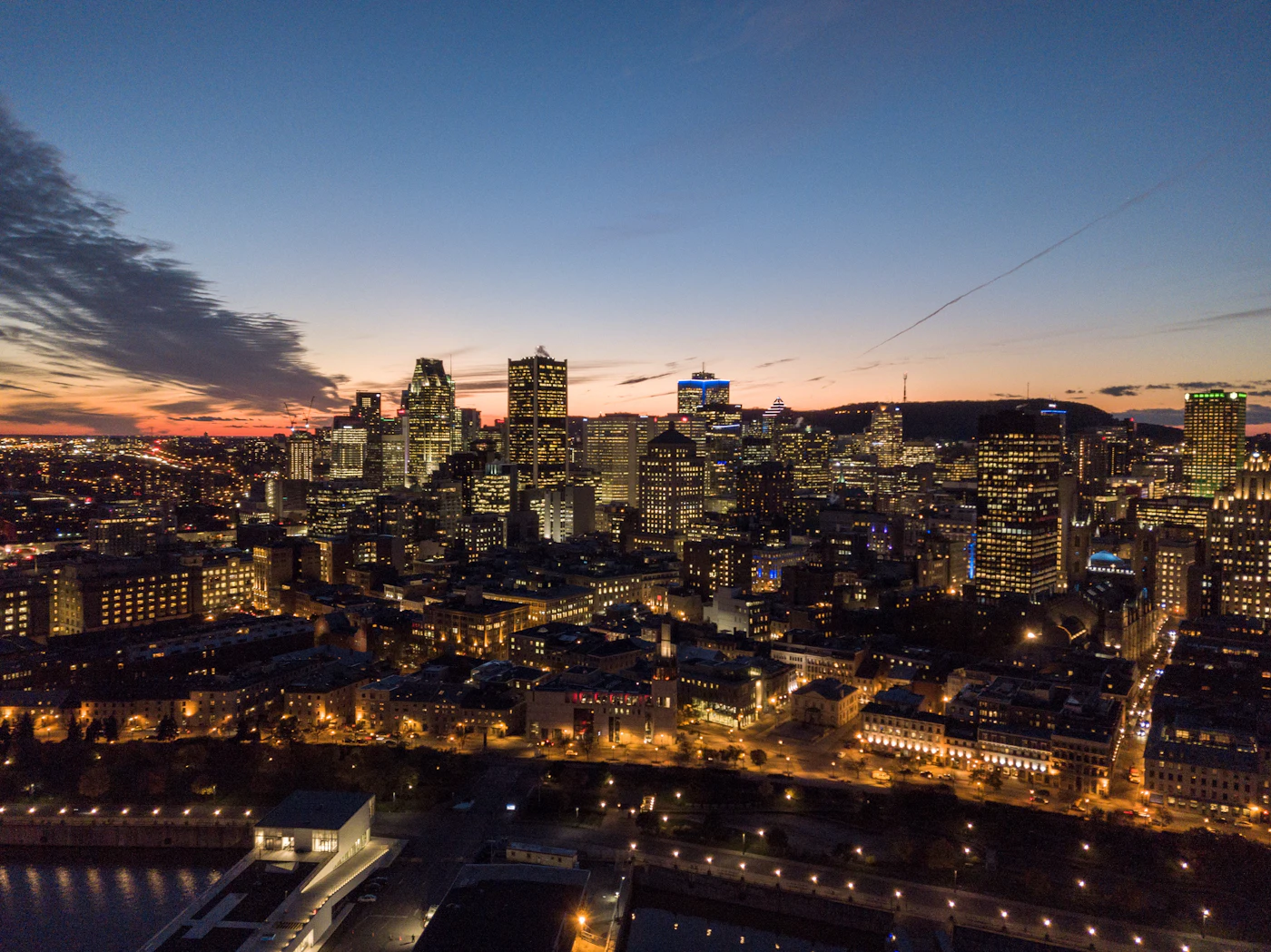
Montreal is a city that never shows you the same face twice. Come in winter and find a metropolis that has made peace with extreme cold — festivals on frozen rivers, underground networks of warmth, ice bars in alleyways. Come in summer and find an explosion of terrasse life, jazz musicians in every square, and a city that simply refuses to go inside. Come in autumn and find a university city turned golden, the mountain ablaze, the restaurants reaching their seasonal peak. Montreal is, without question, one of the world's great cities.
Why Montreal is Unlike Any Other City
Montreal occupies a singular position in North American culture. It is the second-largest French-speaking city in the world (after Paris), but it is also fundamentally bilingual — English and French coexist, overlap, and create something genuinely unique. The city was founded by French colonists in 1642, became British in 1763, absorbed waves of Irish, Italian, Greek, Jewish, Haitian, and more recently South Asian and Latin American immigrants — and from all of this came a culture that is unmistakably, proudly Montréalais.
The city is also shaped by its extraordinary natural setting. Mont Royal — the extinct volcanic hill that rises from the centre of the island — gives the city its name and its most beloved park. The St. Lawrence River defines the island's southern edge and provides the backdrop for Old Montreal's historic port. The city's famous underground network of tunnels and shopping centres (the RÉSO) was built to allow Montrealers to survive winters that can reach -30°C. Yet every spring, the city erupts onto its famous outdoor terrasses as though it has been waiting 6 months for this moment — which, of course, it has.
Montreal is a great starting point for exploring all of Quebec. Build a Montreal-Quebec City-Charlevoix itinerary with TripPlannerPro.com, or explore other Canadian cities at CanadaBestSpots.com.
Montreal's Best Neighbourhoods
Vieux-Montréal (Old Montreal)
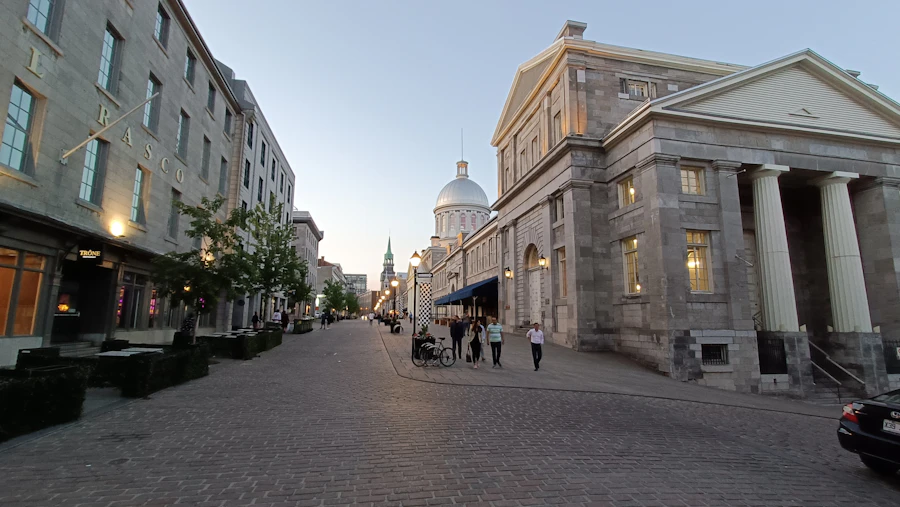
The 17th-century heart of the city occupies a compact grid of cobblestone streets between the cliff and the St. Lawrence River. The neighbourhood is defined by its magnificent stone architecture — warehouses converted to boutique hotels, stone-vaulted restaurants, galleries, and the spectacular Basilique Notre-Dame (whose interior is a jaw-dropping Gothic Revival explosion of blue, gold, and wood carving).
The Old Port (Vieux-Port) runs along the riverfront with cycle paths, a beach, an outdoor cinema in summer, and ice skating in winter. The Clock Tower wharf offers panoramic river views. Rue Saint-Paul is the neighbourhood's main artery — lined with galleries, restaurants, and terrasses that fill to bursting on summer evenings.
Le Plateau-Mont-Royal
The Plateau is the neighbourhood that most embodies the Montréalais art de vivre. Its long, flat streets are lined with colourful Victorian duplexes featuring the city's iconic exterior staircases — wrought iron spirals that wind up to second and third-floor flats, creating a distinctive streetscape found nowhere else in the world. The neighbourhood is bohemian, intellectual, politically engaged, and full of the city's best independent bookshops, coffee shops, natural wine bars, and bistros.
Avenue du Mont-Royal and rue Bernard are the Plateau's main commercial streets — excellent for brunching, browsing vintage shops, and people-watching. The neighbourhood is also the gateway to Parc du Mont-Royal, which rises steeply from its northern edge, offering hiking trails to the summit viewpoint and the beloved Beaver Lake.

Mile End — Montreal's Creative Epicentre
Mile End is the neighbourhood where Montreal's creative class lives, works, and plays. Once a working-class Jewish and Greek neighbourhood (the bagel bakeries — Saint-Viateur and Fairmount — are its founding institutions), it has evolved into a dense creative hub packed with recording studios, graphic design firms, animation companies, indie labels, and the cafés and restaurants that serve them.
The neighbourhood's murals are extraordinary — some of the finest street art in North America covers its brick walls. Bernard Avenue West is lined with terrasse restaurants and wine bars that fill from April to October. The covered market on avenue du Parc is excellent. And the two legendary bagel bakeries operate 24 hours a day, baking their wood-fired, sesame-coated rings of perfection continuously.
Montreal's Essential Must-See Spots
Parc du Mont-Royal — The City's Sacred Mountain
Frederick Law Olmsted — who also designed Central Park in New York — designed Parc du Mont-Royal in 1876. The park's 190 hectares cover the three peaks of the extinct volcano, offering hiking trails, two lookout points (Kondiaronk Belvedere has the most famous panoramic view of downtown), Beaver Lake, cross-country ski trails, and a pavilion. In summer, Sunday afternoon gatherings at the Tam-Tams (informal drumming circles on the lower slopes) are a beloved Montreal institution. In winter, cross-country skiers and snowshoers have the trails largely to themselves.
Marché Jean-Talon — North America's Finest Public Market
Located in the Little Italy neighbourhood, the Marché Jean-Talon is one of the greatest public markets in North America. Year-round but particularly spectacular in summer and autumn, the outdoor stalls overflow with Quebec produce: heritage tomatoes from the Eastern Townships, blueberries from the Saguenay, squashes and gourds from the Laurentians, organic cheeses, maple products, fresh herbs, and flowers. The indoor section houses excellent butchers, fishmongers, wine shops, and speciality food importers. A morning at Jean-Talon is one of Montreal's finest experiences.
The RÉSO — Underground City
Montreal's underground pedestrian network — the RÉSO — is the world's largest: 33 kilometres of tunnels connecting 12 metro stations, 5 bus terminals, 7 major hotels, 2,000 shops, 200 restaurants, universities, museums, and office towers. Built incrementally from 1962 to the present, it allows Montrealers to walk between downtown destinations without ever going outside — essential on -25°C January days. For visitors, it is a remarkable urban phenomenon worth exploring, even (or especially) in summer when its true function can be better appreciated.
Basilique Notre-Dame de Montréal
Completed in 1829 and renovated in the 1870s, Notre-Dame is one of North America's great Gothic Revival interiors. The nave is breathtaking — an explosion of deep blue ceilings painted with gold stars, intricate wood carving, stained glass windows depicting the founding of Montreal, and a 7,000-pipe organ. Celine Dion was married here. The nightly AURA light show projects vivid digital art on the interior walls. Guided tours run throughout the day.
Montreal's Food Scene: What to Eat and Where
Montreal has one of the finest dining cultures in North America — a combination of French culinary tradition, immigrant influences, local Quebec produce, and a genuinely competitive restaurant scene that keeps standards exceptionally high. These are the essential Montreal food experiences:
Smoked Meat at Schwartz's
The legendary deli on boulevard Saint-Laurent. A smoked meat sandwich on rye with mustard and a pickle — this is the Montreal dish. Always a line; always worth it.
Poutine at La Banquise
The 24-hour Plateau institution serves 30+ poutine variations. The classic (fries, cheese curds, gravy) is the benchmark against which all others are measured.
Wood-Fired Bagels (Mile End)
Montreal bagels — smaller, denser, slightly sweet — are hand-rolled, boiled in honey water, and baked in wood-fired ovens continuously at Fairmount and St-Viateur.
Depanneur Snacks
Montreal's dépanneurs (corner stores) sell sandwiches, cold cuts, and local products at all hours. An essential part of the city's food culture and daily rhythm.
Portuguese Chicken (Little Portugal)
Notre-Dame-de-Grâce and Notre-Dame-de-la-Merci neighbourhoods have outstanding rotisserie chicken spots — a legacy of Montreal's large Portuguese community.
Maple-Glazed Beavertails
The Old Port's BeaverTails stand serves fried pastry topped with maple butter, cinnamon sugar, or Nutella — the ultimate Canadian street food, year-round.
Montreal's Great Festivals
Montreal is arguably the festival capital of North America. Its summer calendar is packed with world-class events:
- Festival International de Jazz de Montréal (late June–early July) — The world's largest jazz festival; over 3,000 concerts, half free
- Just For Laughs (July) — The world's largest comedy festival
- Montréal en Lumière (February) — A three-week winter light and gastronomy festival
- Osheaga (August) — One of North America's best music festivals, in Parc Jean-Drapeau
- MURAL Festival (June) — Street art festival transforming boulevard Saint-Laurent
- Piknic Électronik (May–October, Sundays) — Outdoor electronic music gatherings on Île Sainte-Hélène
Plan Your Perfect Montreal Visit
Whether you're spending a weekend or a full week, TripPlannerPro helps you build the ideal itinerary — combining Montreal's neighbourhoods, day trips, and cultural highlights.
Build My Montreal Itinerary Explore All of CanadaDay Trips from Montreal
Montreal's location makes it an excellent base for regional exploration. The Eastern Townships (90 minutes southeast) offer vineyards, covered bridges, and the charming village of Knowlton. The Laurentians (90 minutes north) provide mountain scenery, Mont-Tremblant, and lake country. Quebec City (3 hours east by train) is always worth a separate visit. See our ultimate Quebec travel guide for ideas on combining Montreal with other destinations.
For broader Canadian adventures beyond Quebec, CanadaBestSpots.com covers the country's finest destinations coast to coast, and TripPlannerPro.com will help you piece together a multi-region Canadian itinerary that makes the most of your time.