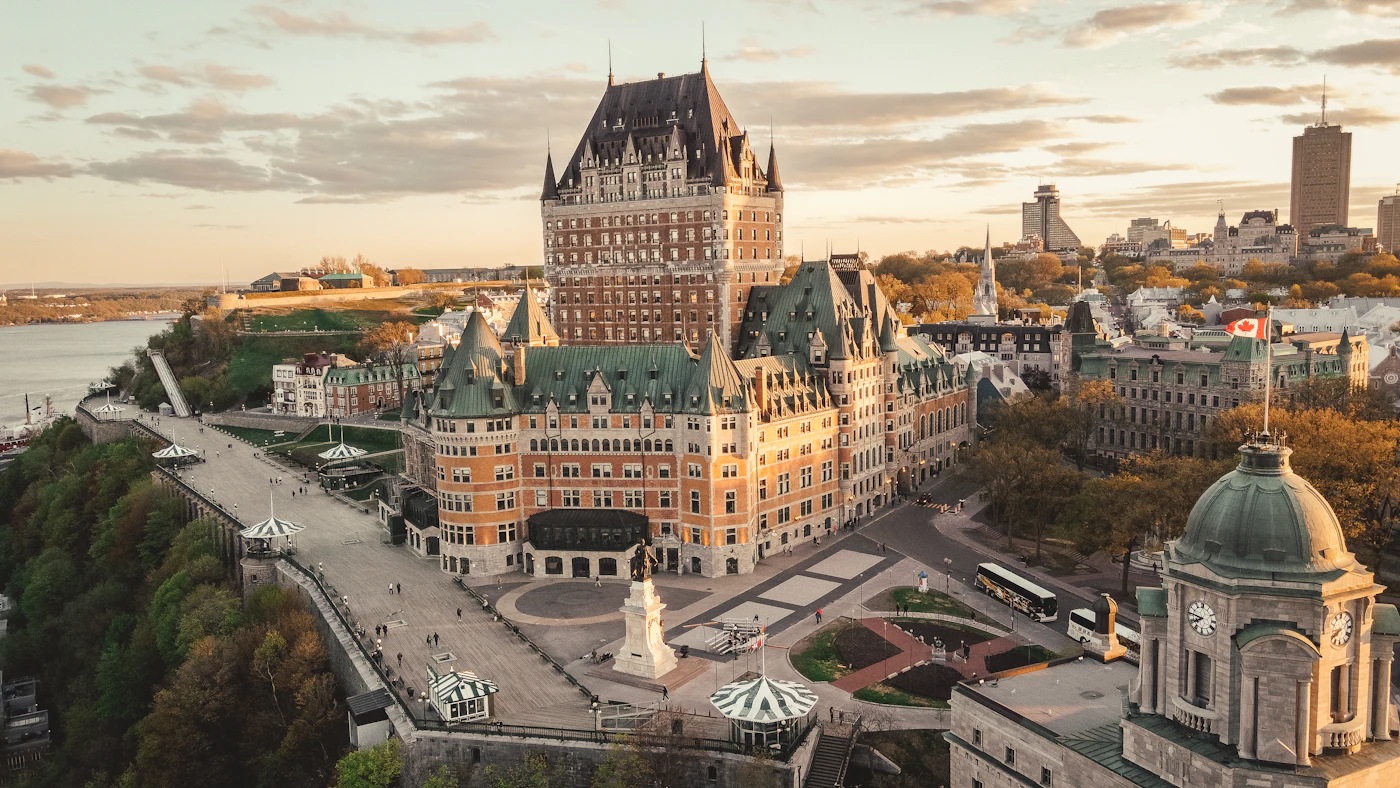
Quebec is unlike anywhere else in North America. It is a place where 17th-century fortified walls stand at the edge of a modern city, where you can kayak alongside beluga whales in the morning and dine in a Michelin-calibre restaurant that evening, where a road trip along a sea cliff feels like driving through a painting. This is the only Quebec travel guide you will ever need.
Why Quebec Belongs on Every Traveller's List
Canada's largest province by area is often overshadowed by the Rocky Mountains in travellers' imaginations, but those who make the journey to Quebec return home with memories that last a lifetime. Quebec City is the only fortified city north of Mexico — a UNESCO World Heritage site that feels genuinely medieval yet pulsates with contemporary Québécois culture. Montreal is a bilingual, bicultural metropolis that consistently ranks as one of the world's most liveable and most visited cities. Beyond these two anchors, the province unfolds into regions of staggering natural beauty: the Gaspé Peninsula's sea cliffs, the Charlevoix's mountain-meets-fjord drama, the Laurentians' lake-studded forests, the Saguenay's enormous fjord, and the Eastern Townships' pastoral serenity.
Quebec is also a place of profound cultural pride. The French language, the joie de vivre, the culinary traditions (poutine is just the beginning), the winter festivals, the summer terrace culture — all of it adds up to a travel experience that is distinctly unlike anything else in North America. Planning your Quebec adventure requires understanding which regions suit your interests and which seasons reveal each destination at its best.
Before diving in, use TripPlannerPro.com to build a custom Quebec itinerary and explore more of Canada at CanadaBestSpots.com.
Quebec by Region: A Quick Overview
Quebec covers 1.5 million square kilometres — larger than France, Germany, and Spain combined. No single trip can cover it all. Here is a framework to help you choose:
1. Montreal — Canada's Beating Cultural Heart
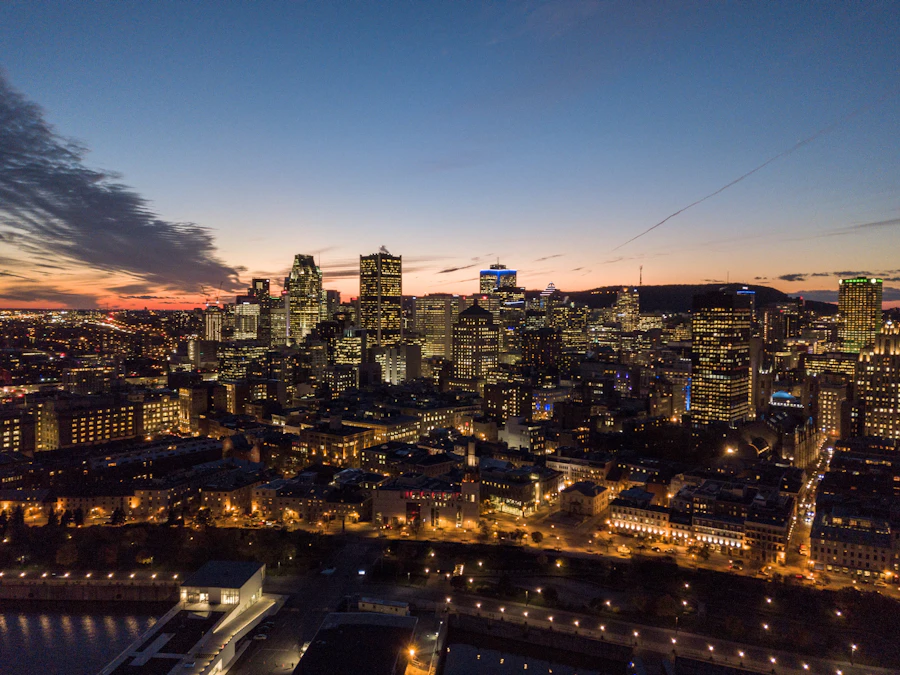
Montreal
Montreal defies easy categorisation. It is simultaneously French and English, historic and avant-garde, working-class and glamorous. The city sits on an island in the St. Lawrence River, overlooked by Mont Royal — the extinct volcanic hill that gives the city its name and serves as its great green lung.
The city is divided into distinctive neighbourhoods: Vieux-Montréal (Old Montreal) with its cobblestone streets and 17th-century architecture; Le Plateau-Mont-Royal with its colourful Victorian duplexes and indie cafés; Mile End, epicentre of the city's creative scene; Rosemont–La Petite-Patrie with the legendary Marché Jean-Talon; and the Gay Village, one of the largest and most vibrant in North America.
Top Spots
- Old Montreal & Old Port
- Mont Royal Park (Parc du Mont-Royal)
- Marché Jean-Talon
- Plateau-Mont-Royal streets
- Mile End murals and cafés
- Underground City (RÉSO)
- Notre-Dame Basilica
- Bota Bota spa on a boat
Best Time to Visit
- June–August: Jazz Festival, terrasses
- September–October: Fall foliage on the mountain
- February: Fête des Neiges
- Year-round: museums, food, nightlife
Montreal's food scene is one of the finest on the continent. The city claims its own smoked meat (Schwartz's Deli is legendary), its own style of bagel (wood-fired, smaller and sweeter than New York's), world-class poutine at La Banquise, and a restaurant scene that stretches from Michelin-star territory to beloved neighbourhood bistros. The terrasse culture — outdoor dining that erupts every summer with barely-suppressed joy — is one of the city's defining pleasures.
For a deep dive, read our guide to Montreal's best spots and hidden gems. And if you want to include Montreal in a broader Canada itinerary, TripPlannerPro.com can help you build the perfect multi-city route.
2. Quebec City — The Most European City in the Americas
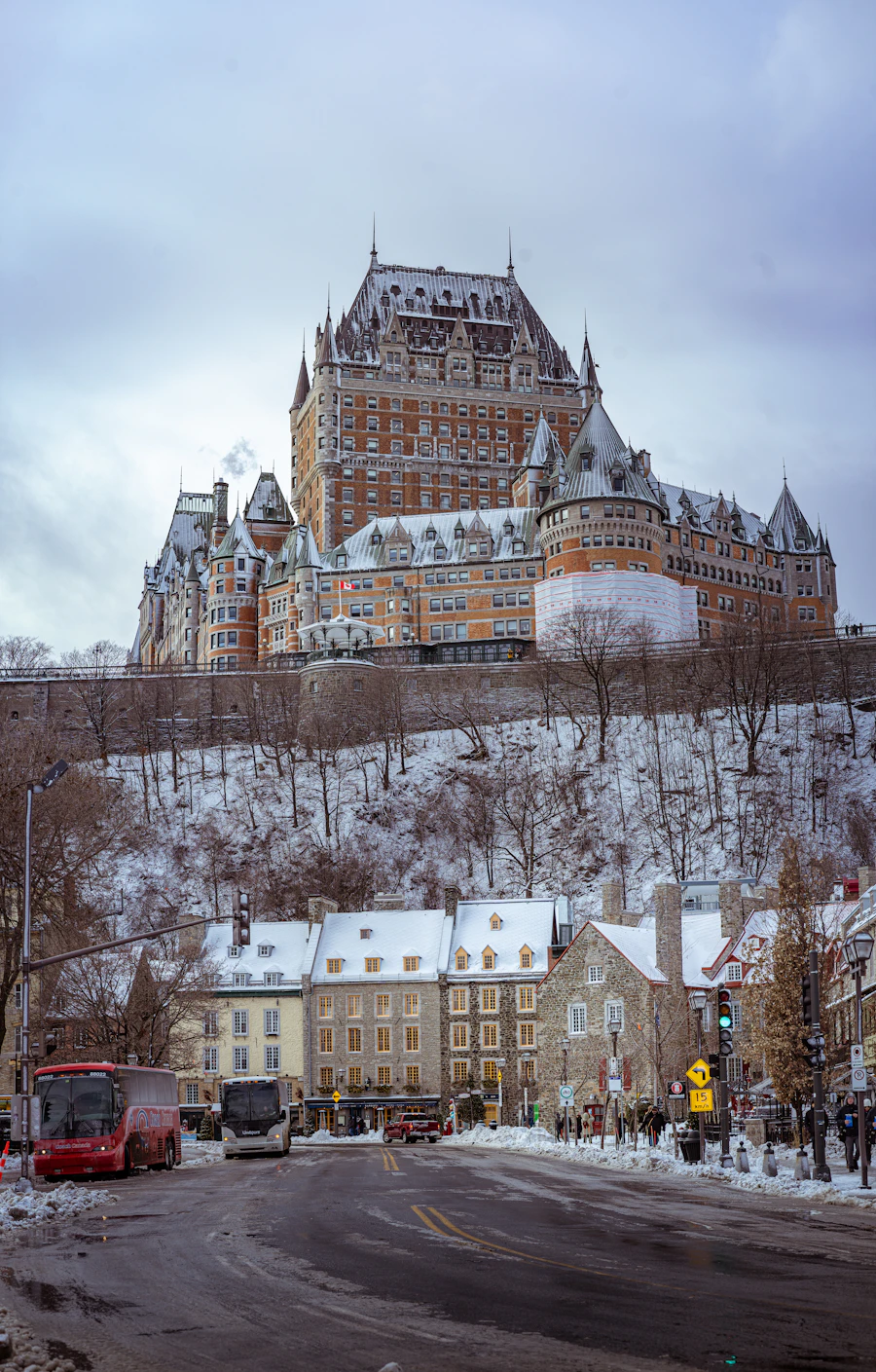
Quebec City
Quebec City is a city that makes grown adults feel like children again, eyes wide with wonder. The Old City (Vieux-Québec) is North America's only walled city north of Mexico, a UNESCO World Heritage Site where horse-drawn calèches clip through cobblestone streets beneath the towering Château Frontenac — the most photographed hotel in the world.
But Quebec City is more than its postcard image. The city divides into the Haute-Ville (Upper Town) on the cliffs and Basse-Ville (Lower Town) along the river, connected by the famous funicular and the historic stairs of the Escalier Casse-Cou. The neighbourhood of Saint-Roch has transformed into a thriving arts and tech quarter. The Plains of Abraham — the site of the 1759 battle that shaped Canadian history — serves as the city's great public park.
Top Spots
- Petit-Champlain (oldest commercial district)
- Place Royale — the city's founding square
- Plains of Abraham
- Fortifications walk
- Montmorency Falls (taller than Niagara)
- Saint-Roch neighbourhood
- Citadelle de Québec
- Quartier du Petit-Champlain at Christmas
Best Time to Visit
- Winter Carnival (February) — ice castle, night parade
- June–August — outdoor concerts, terrasses
- December — Christmas market, ice skating
- October — fall foliage and crisp air
Quebec City's Winter Carnival (Carnaval de Québec) is one of the world's great winter festivals — a two-week celebration from late January to mid-February featuring ice sculptures, an ice palace, night parades, and the famous Ice Hotel (Hôtel de Glace). Embracing winter rather than hiding from it is a core part of Québécois identity, and nowhere is this more evident than in Quebec City.
For a comprehensive exploration, see our guide to the best spots in Quebec City beyond the Château Frontenac.
3. The Gaspé Peninsula — Quebec's Wild Coastal Jewel
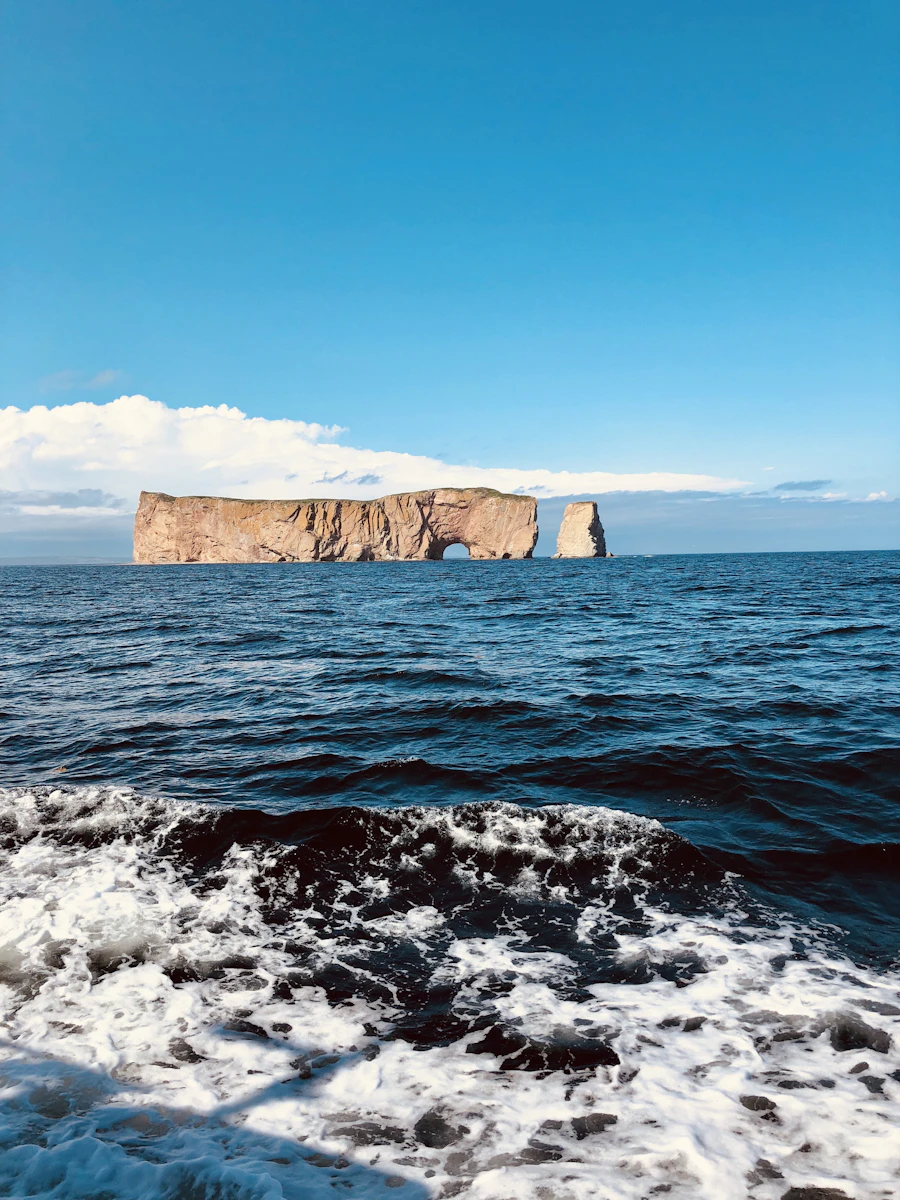
Gaspésie (Gaspé Peninsula)
The Gaspé Peninsula is Quebec's wild heart — a finger of land pointing into the Gulf of St. Lawrence, ringed by dramatic cliffs, fishing villages frozen in time, and some of the most spectacular scenery in eastern Canada. The iconic Route 132 circumnavigates the entire peninsula in about 900 kilometres, passing through the Parc de la Gaspésie (where caribou still roam), the sea-stack wonder of Rocher Percé, and the remote Forillon National Park at the very tip of the peninsula.
Top Spots
- Rocher Percé (pierced rock)
- Île Bonaventure (gannet colony)
- Forillon National Park
- Parc de la Gaspésie (Chic-Chocs)
- Matane moose watching
- Grand-Métis gardens
- Sainte-Anne-des-Monts
Best Time to Visit
- July–September: ideal road trip weather
- August: whale watching (minke, fin)
- October: moose rut, autumn colour
- Winter: cross-country skiing in Chic-Chocs
Full guide: Gaspésie: Quebec's Most Dramatic Coastal Drive. For ideas on combining Gaspésie with other Atlantic Canada destinations, check out CanadaBestSpots.com.
4. Charlevoix — Where Mountains Meet the St. Lawrence
Charlevoix
Created 350 million years ago by a meteorite impact, the Charlevoix crater-turned-valley is one of Quebec's most extraordinary landscapes. Designated a UNESCO Biosphere Reserve, this region stretching northeast of Quebec City along the St. Lawrence has attracted artists and intellectuals for over two centuries — and with good reason. The light here is unlike anywhere else.
Top Spots
- La Malbaie and Pointe-au-Pic
- Baie-Saint-Paul arts scene
- Tadoussac whale watching
- Parc des Grands-Jardins
- Le Massif de Charlevoix ski resort
- Train du Massif (scenic railway)
- Cap-à-l'Aigle viewpoints
Best Time to Visit
- Summer: whale watching, hiking, terrasses
- Fall: foliage and harvest cuisine
- Winter: ski at Le Massif (longest drop in eastern Canada)
- Spring: maple syrup season
See our complete Charlevoix guide for an in-depth look at this extraordinary region.
5. The Laurentians — Quebec's Four-Season Playground
Just 90 minutes north of Montreal, the Laurentians (Laurentides) region transforms with every season. In winter, it hosts some of the best skiing in eastern North America, anchored by the famous Mont-Tremblant resort. In summer, the same mountains become hiking and mountain biking terrain, while the hundreds of lakes offer kayaking, swimming, and cottage country escape. In autumn, the Laurentians turn into a palette of gold, crimson, and orange that draws leaf-peepers from across the continent.
The village of Mont-Tremblant itself is a pedestrian ski village that feels genuinely European — cobblestoned, colourful, and animated year-round. Beyond Tremblant, the region offers the charming towns of Saint-Jovite and Saint-Sauveur, the Parc national du Mont-Tremblant (the oldest in Quebec), and a network of cycling trails including the famous P'tit Train du Nord rail trail.
Top Laurentians Spots
- Mont-Tremblant pedestrian village
- Parc national du Mont-Tremblant
- P'tit Train du Nord cycling trail (230km)
- Lake Supérieur and Lake Tremblant kayaking
- Saint-Sauveur outlet shopping and skiing
- Val-David arts community
6. Eastern Townships — Quebec's Most Pastoral Region
The Eastern Townships (Cantons-de-l'Est) feel like Vermont crossed with Provence — rolling green hills, covered wooden bridges, apple orchards, vineyards, and charming villages with names like Knowlton, Sutton, and North Hatley. Settled largely by United Empire Loyalists fleeing the American Revolution, the region has a distinctly English character overlaid with French-Canadian culture.
The Eastern Townships are Quebec's wine country — with over 20 vineyards producing internationally recognised wines, particularly in the Dunham and Bromont area. Sherbrooke, the region's main city, has a vibrant arts scene anchored by the Musée des beaux-arts de Sherbrooke. Parc national du Mont-Orford and the lac Memphrémagog area (which straddles the US border) offer excellent hiking, sailing, and fall colour.
Top Eastern Townships Spots
- Route des vins (wine route) in Dunham area
- Knowlton (Lac-Brome) village
- Sutton ski resort and hiking
- Parc national du Mont-Orford
- Lac Memphrémagog boat trips
- North Hatley lakefront village
- Abbaye de Saint-Benoît-du-Lac (Gregorian chant)
7. Saguenay–Lac-Saint-Jean — Fjord Country
The Saguenay Fjord is one of the world's southernmost fjords — a dramatic cleft in the Canadian Shield filled with cold, dark, remarkably deep water. The fjord stretches nearly 100 kilometres inland from the St. Lawrence, with walls rising 300 metres on either side. Kayaking the fjord is one of Quebec's great adventure experiences; whale watching at the confluence of the Saguenay and St. Lawrence at Tadoussac is world-class, with minke, fin, and beluga whales regularly observed.
Lac-Saint-Jean, the vast lake at the head of the Saguenay River, has its own distinct culture — the residents here are known as Bleuets (blueberries, after the region's famous wild fruit) and take considerable pride in their regional identity. The 256-kilometre Véloroute des Bleuets cycling circuit around the lake is one of Quebec's finest bike routes. The town of Mashteuiatsh on the lake's shore is home to the Innu First Nation and an excellent museum of indigenous culture.
Top Saguenay–Lac-Saint-Jean Spots
- Tadoussac whale watching and dune village
- Parc national du Fjord-du-Saguenay
- Cape Trinité lookout (300m above the fjord)
- Véloroute des Bleuets cycling circuit
- Mashteuiatsh Innu cultural centre
- Chicoutimi Cathedral ruins (historic)
- Val-Jalbert ghost village and waterfall
When to Visit Quebec: A Season-by-Season Guide
| Season | Highlights | Watch Out For |
|---|---|---|
| Summer (Jun–Aug) | Montreal Jazz Festival, Quebec City Summer Festival, terrasse culture, hiking, kayaking, whale watching | Heat and humidity in Montreal; book accommodations early for festivals |
| Fall (Sep–Oct) | Spectacular foliage (Laurentians, Eastern Townships), harvest festivals, smaller crowds, crisp air | Shorter days; some attractions begin to close |
| Winter (Nov–Mar) | Quebec City Winter Carnival, Ice Hotel, skiing in Laurentians and Charlevoix, Christmas markets | Extreme cold (-20°C possible); dress in layers; some rural roads difficult |
| Spring (Apr–May) | Maple syrup season (sugar shacks), spring snowmelt, fewer crowds, lower prices | Mud season on rural roads; variable weather |
Practical Information for Visiting Quebec
Getting Around
Quebec is large, and a car is essential for exploring beyond Montreal and Quebec City. The highway network is excellent, and the Trans-Canada Highway (Route 20) connects the major cities. Via Rail provides train service between Montreal and Quebec City (3 hours). Orléans Express buses connect many regional centres.
Language
French is the official language of Quebec, and Québécois French has its own rich accent and vocabulary distinct from European French. In Montreal and Quebec City tourist areas, English is widely spoken. In rural regions, French is predominant — a basic bonjour and merci go a long way, and locals deeply appreciate any effort to speak French.
Currency & Costs
Canada uses the Canadian dollar (CAD). Quebec is generally less expensive than British Columbia and somewhat cheaper than Ontario. Budget travellers can manage on $80–100 CAD/day; a comfortable trip runs $150–250/day; luxury accommodation and dining can run $400+/day per person.
Entry Requirements
Most visitors require either a visa or an Electronic Travel Authorization (eTA) to enter Canada. Citizens of the US only need a valid passport. Check the official Government of Canada website for current requirements, as they can change. For comprehensive Canada entry information, TripPlannerPro.com has up-to-date guides.
Ready to Plan Your Quebec Adventure?
Get a custom itinerary, insider tips, and the best spots across all of Canada — including Quebec's hidden gems that most travellers never find.
Quebec's Best Hidden Gems
Beyond the well-known destinations, Quebec hides extraordinary places that most visitors miss entirely. Here are some of the province's best-kept secrets:
- Île d'Orléans — A rural island in the St. Lawrence just minutes from Quebec City, famous for its strawberries, cider, artisan products, and pastoral landscapes unchanged since the 17th century.
- Parc national des Hautes-Gorges-de-la-Rivière-Malbaie — Quebec's deepest valley, hidden in the Charlevoix interior. Canyon walls rise 800 metres; boat tours navigate between them.
- Val-Jalbert Historic Village — A perfectly preserved ghost town from a 1920s pulp mill community, complete with a spectacular 72-metre waterfall. One of Quebec's most underrated sites.
- Îles de la Madeleine (Magdalen Islands) — Remote archipelago in the Gulf of St. Lawrence, with red sandstone cliffs, vast sand dunes, seafood that would make a Marseille chef weep, and a sealing culture dating back centuries.
- La Vérendrye Wildlife Reserve — 12,000 km² of boreal forest between Montreal and Abitibi, threaded by canoe routes used for centuries by Indigenous peoples. Moose, wolves, ospreys, and absolute wilderness.
- Percé Geopark — Beyond the famous rock, Percé has dramatic sea caves, whale watching, and fossil-rich cliff faces that tell 375 million years of geological history.
- Abbaye de Saint-Benoît-du-Lac — A working Benedictine monastery on the shores of Lac Memphrémagog in the Eastern Townships. Gregorian chant fills the air; their handmade cheese and apple products are magnificent.
Quebec's Spectacular Waterfalls
Quebec is home to some of North America's most dramatic waterfalls, from the thundering Montmorency Falls near Quebec City (84 metres — taller than Niagara) to the mystical Ouiatchouan Falls in Mashteuiatsh. Read our complete guide to the best waterfalls in Quebec for waterfall-chasing itineraries across the province.
The Bottom Line: Why Quebec Will Surprise You
Quebec surprises visitors who expect "Canada with a French accent" and instead find a deeply distinct society with its own history, language, cuisine, festivals, values, and relationship to the land. To travel Quebec well is to travel slowly enough to catch the details: the iron fire escapes spiralling down Plateau-Mont-Royal duplexes, the particular blue of the St. Lawrence in September, the sound of joual (Québécois slang) at a hockey game, the way maple syrup tastes when poured over fresh snow at a sugar shack in April.
This guide covers the major regions, but Quebec rewards those who venture deeper. Use TripPlannerPro.com to craft an itinerary tailored to your interests and travel dates, and explore CanadaBestSpots.com to pair your Quebec trip with other extraordinary Canadian destinations. La Belle Province is waiting.