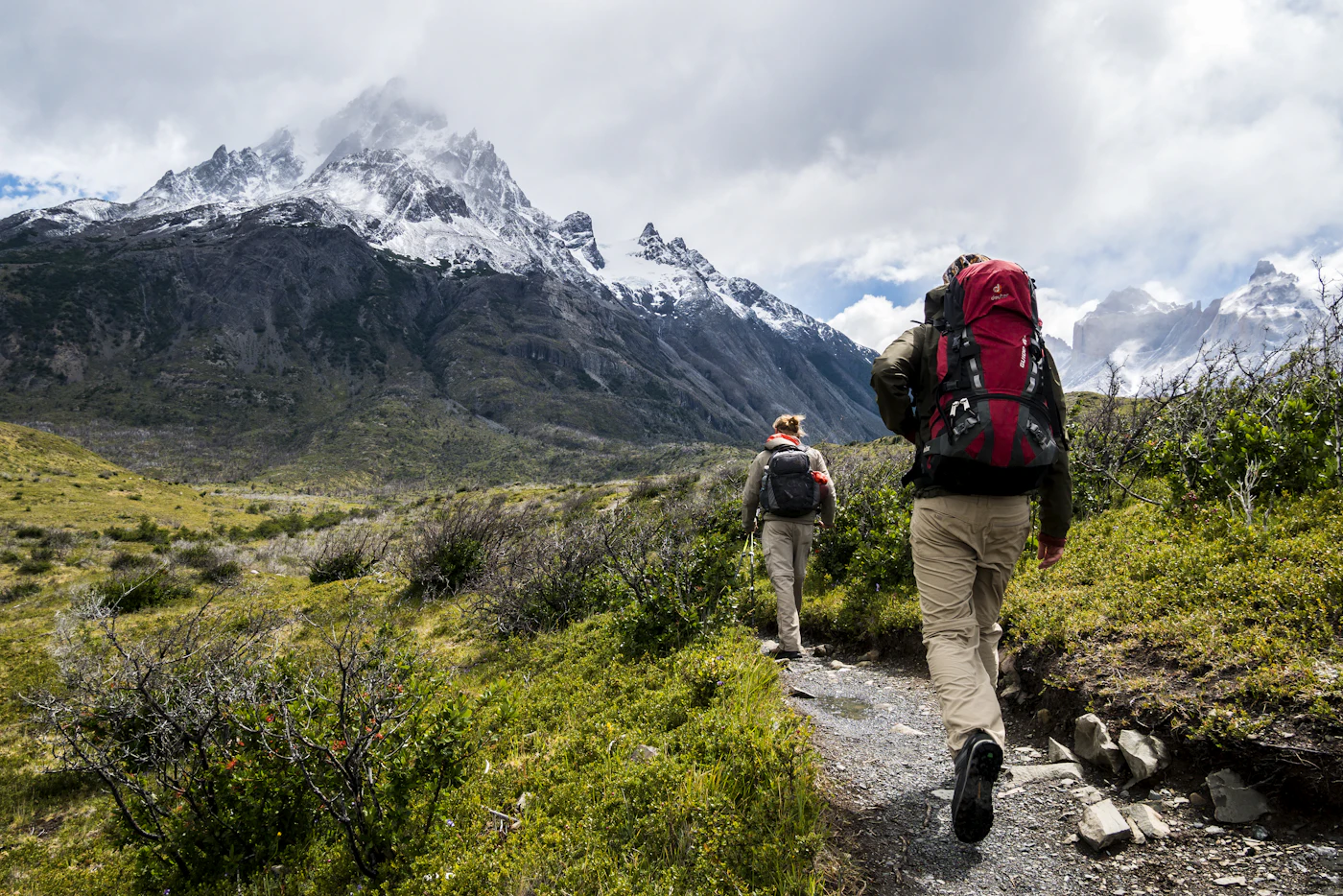
Quebec's hiking landscape is one of the great secrets of eastern North America. The province spans a geological diversity that rivals anywhere on the continent — from the ancient rounded peaks of the Appalachian chain in the south to the fjord-carved Laurentians in the north, from the sub-alpine tundra of the Gaspé's Chic-Choc Mountains to the seacliff trails of the St. Lawrence shore. Whether you seek summit panoramas, forest solitude, or coastal drama, Quebec delivers at every level of difficulty and ambition.
Gaspésie: The Chic-Choc Mountains
The Gaspésie mountains — officially the Chic-Chocs, part of the Notre-Dame range that is itself the northernmost extension of the Appalachian chain — contain the most alpine hiking terrain in Quebec and some of the most demanding trails in eastern Canada. The peaks here exceed 1,000 metres, the vegetation above treeline is true arctic-alpine tundra, and the resident caribou herd (one of the last woodland caribou herds south of the St. Lawrence) is a wildlife highlight unlike anything else in the province.
Mont Jacques-Cartier Summit Trail
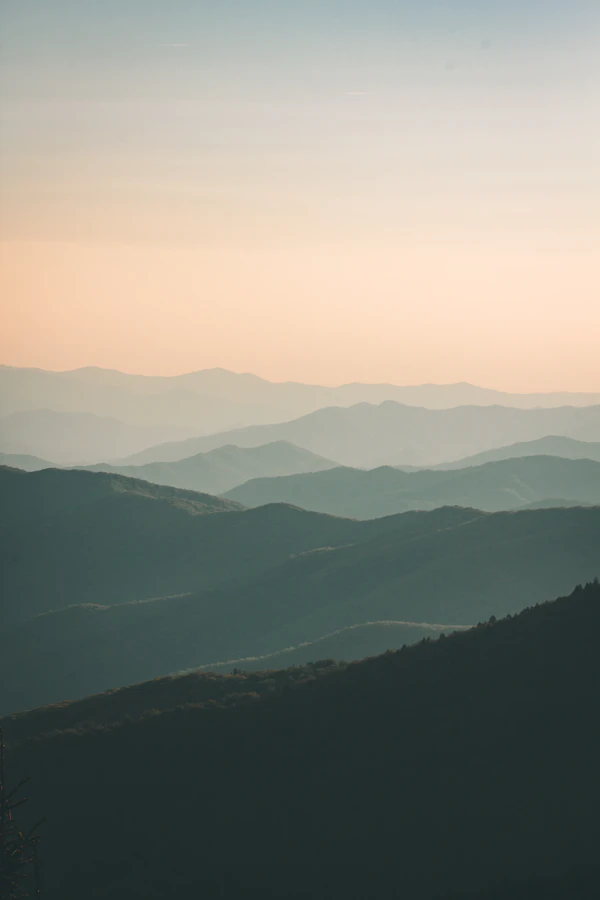
At 1,268 metres, Mont Jacques-Cartier is the highest summit in Quebec south of the St. Lawrence. The summit trail (8 km return, moderate–difficult) climbs through boreal forest before breaking into the open tundra of the plateau — where caribou are commonly seen grazing among the low-growing vegetation. The panorama from the top encompasses the full Gulf of St. Lawrence to the east and the rolling Chic-Choc Mountains to the west. Parks Canada requires hikers to register at the Gîte du Mont-Albert before ascending.
Mont Albert Plateau Circuit
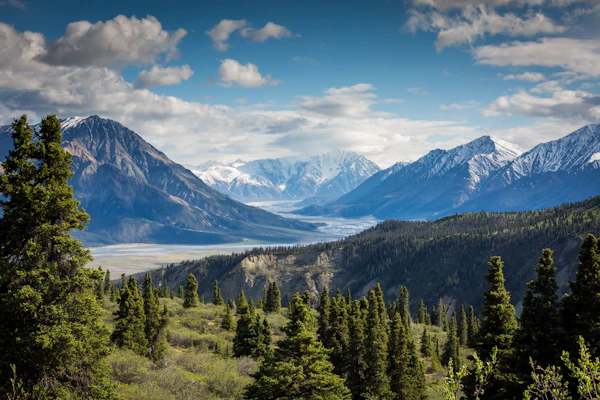
Mont Albert (1,154 m) offers one of the most unusual hiking environments in Quebec — the summit plateau is a vast serpentinite rock desert, nearly devoid of higher plant life due to the rock's toxic mineral content, creating a Martian landscape at the heart of the Chic-Chocs. The circuit trail (20 km, difficult, best as a 2-day hike with overnight at the refuge) crosses the plateau and descends through exceptional valley scenery. The alpine meadows on the approach to the plateau shelter moose, black bear, and the Gaspésie woodland caribou herd.
Mont-Mégantic: Dark Sky and Alpine Forest
Mont-Mégantic National Park, in the Eastern Townships near the Quebec-Maine border, combines the province's finest dark-sky experience with outstanding hiking through a mature old-growth forest landscape. The park protects the slopes of Mont-Mégantic (1,105 m) and the adjacent Mont-Saint-Joseph, connected by the Sentier des Cimes (Treetop Trail). The International Dark-Sky Reserve surrounding the park is one of only a handful in the world, and the ASTROLab observatory on the summit offers public observation sessions on clear nights.
Sentier des Cimes — Summit Circuit
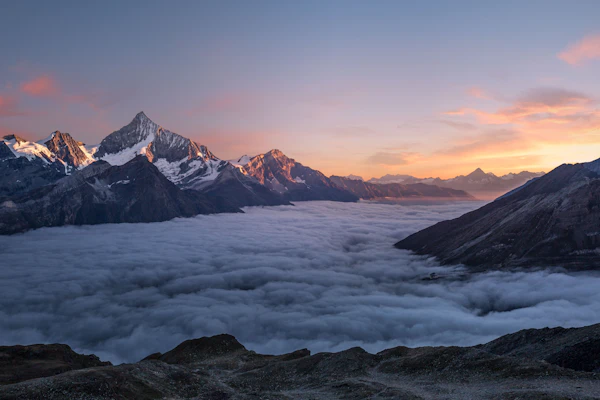
The most popular route in Mont-Mégantic National Park connects the two summits — Mont-Mégantic and Mont-Saint-Joseph — via the Sentier des Cimes through old-growth boreal forest. The full circuit (12 km, moderate) rewards with panoramic views over the Eastern Townships and, on clear days, as far as Mont Orford to the west and the Appalachian ridges of Maine and Vermont to the south. The hike is best combined with an evening ASTROLab observation session for a complete Mont-Mégantic experience.
Charlevoix: The Saguenay Fjord Trails
Charlevoix, the UNESCO World Biosphere Reserve north of Quebec City, offers some of the most scenically dramatic hiking in eastern Canada. The Saguenay–St. Lawrence Marine Park's coastal trails follow the fjord rim at heights up to 400 metres above the river, providing the finest elevated views of the St. Lawrence River and its beluga whale population. For a broader overview of Charlevoix's attractions, see our Charlevoix hidden gems guide.
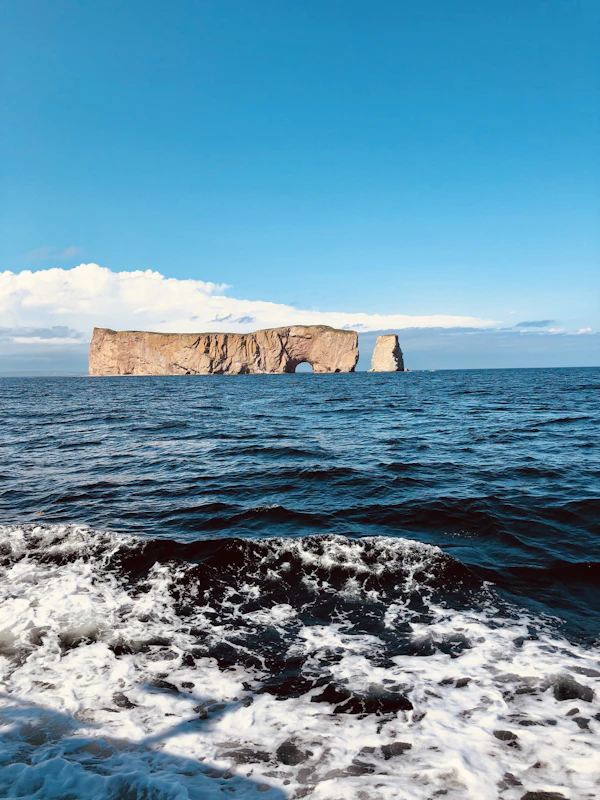
Sentier du Fjord (Saguenay)
The Sentier du Fjord follows the north rim of the Saguenay Fjord for 42 kilometres, from Rivière-Éternité to Tadoussac. The trail can be divided into day segments, with the most spectacular section being the Cap Trinité portion — where the trail climbs to a viewpoint above the famous Notre-Dame-du-Saguenay statue, with the dark fjord 300 metres below. This is Quebec hiking at its most dramatic: sheer rock walls, boreal forest, and a waterway so deep and dark it appears almost black.
Laurentians: The Classic Quebec Hiking Region
The Laurentians — the low, rounded shield mountains north of Montreal — are Quebec's most accessible hiking region. Mont-Tremblant National Park anchors the region with 100+ km of maintained hiking trails through old-growth forest, past glacial lakes, and to viewpoints over the Laurentian valleys. The Corridor Aérobique and the linear trails connecting Laurentian villages offer multi-day hiking routes that combine forest trail with cultural heritage stops.
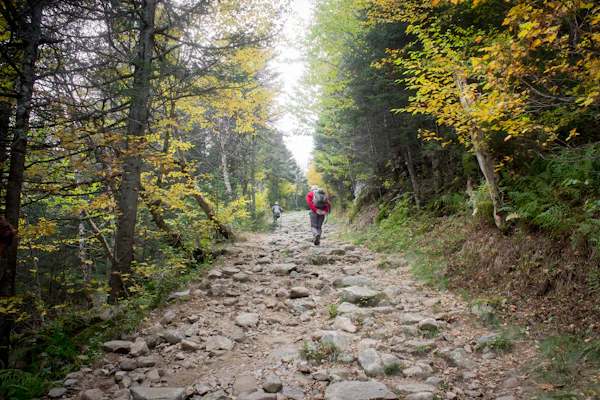
La Roche Trail — Mont-Tremblant NP
La Roche is Mont-Tremblant National Park's most rewarding viewpoint trail — a 6.4 km return hike that climbs steadily through old-growth maple and yellow birch forest before emerging on a rocky outcrop with panoramic views over Lac-Monroe and the surrounding Laurentian peaks. The trail is particularly spectacular in October when the deciduous forest below blazes with fall colour. The Diable River valley visible from the top is one of the finest natural landscapes near Montreal. For the best Gaspésie road trip connecting to the park, see our Gaspésie guide.
The Appalachian Trail in Quebec
The Sentier des Appalaches (Quebec's section of the Appalachian Trail system) traverses the full length of the province's southern mountain chain, from the US border near Sutton to Mont-Mégantic in the Eastern Townships and beyond to the Matapédia Valley. The Quebec section offers some of the finest long-distance hiking in eastern Canada — through deciduous and boreal forest, past ridge-top views of Vermont and New Hampshire across the border, and through the quiet mountain communities of the Estrie and Montérégie regions.
Quebec's national parks require a park access fee. Trail conditions and closures are updated on the Sépaq website (sepaq.com). Always carry a topographic map and compass in the Gaspésie mountains — cell service is unreliable. Black bear and moose are present throughout; make noise on the trail and carry bear spray in remote areas. The best hiking season runs mid-June through mid-October.
Explore More of Quebec
Discover the best viewpoints, waterfalls, and hidden gems across the province with our expert guides.
Gaspésie Guide Best Waterfalls